- Printed Journal
- Indexed Journal
- Refereed Journal
- Peer Reviewed Journal
Journal of Pharmacognosy and Phytochemistry
Vol. 14, Issue 5 (2025)
Effect of cooking technologies on the micronutrient and antioxidant content of Vigna radiata seeds
Mahamadi Ouedraogo, Yssouf Karanga, Remy K Bationo, Moumouni Koala and Eloi Palé
The actual nutrient content of legumes needs to be examined in detail. Indeed, the various mechanisms involved in preparing dishes for human consumption can affect the nutritional value and bioavailability of nutrients such as phenolic compounds, carotenoids and mineral elements. Vigna radiata varieties rich in bioactive compounds were selected to explore the effects of culinary processes on the nutritional value of the seeds. The processes applied were: roasting, direct cooking, soaking/baking and germination. The results obtained after these processes showed a negative impact in terms of a reduction in TPC (1.32 to 56.17%), TFC (4.26 to 94.51%) and TCC (4.29 to 37.20%) content, but also a positive effect due to the reduction in tannins (0.74 to 84.98%), which are considered to be anti-nutritional factors. Of these processing methods, roasting resulted in better retention of bioactive compounds. Although soaking eliminates certain anti-nutritional factors such as tannins, it is recommended to use the soaking water for cooking in order to maintain certain antioxidant compounds of nutritional interest.
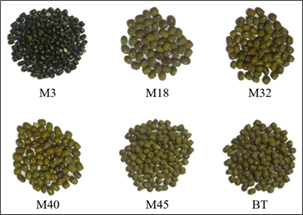
Fig. 1: Vigna radiata varieties for culinary treatments
Pages: 638-645 | 262 Views 80 Downloads





E-ISSN: 2278-4136
- P-ISSN: 2349-8234
- CODEN Code: JPPOHO
- Abbr: J Pharmacogn Phytochem
India (Tel): +91-9711224068
- Toll Free (India): 1800-1234-070