- Printed Journal
- Indexed Journal
- Refereed Journal
- Peer Reviewed Journal
Journal of Pharmacognosy and Phytochemistry
Vol. 14, Issue 6 (2025)
Phytochemical-based therapeutics for diabetic foot ulcer management: Mechanistic insights and advances in wound healing strategies
Subhasini Kandasamy and Shanmugarathinam Alagarsamy
DFUs represent a complex and severe manifestation of diabetes, arising from various interlinked pathological factors, often resulting in chronic infections, tissue necrosis, and lower-limb amputations. The complex pathophysiology of DFUs marked by impaired angiogenesis, excessive oxidative stress, persistent inflammation, and peripheral neuropathy renders conventional treatment modalities largely insufficient. In this context, phytochemicals, naturally occurring bioactive compounds derived from plants, have emerged as promising therapeutic agents in wound management due to their multifaceted biological activities. These include antioxidant, anti-inflammatory, antimicrobial, and pro-angiogenic properties, which collectively contribute to enhanced tissue regeneration. This review delineates the integral roles of phytochemicals in modulating key phases of wound healing, such as cellular proliferation, extracellular matrix remodelling, neovascularization, and immunological balance. It further classifies and explores major phytochemical groups flavonoids, alkaloids, terpenoids, polyphenols, and tannins highlighting their underlying molecular mechanisms and relevance in preclinical and clinical settings. The special attention is given to recent advances in phytochemical-loaded delivery systems, including hydrogels, electro-spun nanofibers, and biomimetic scaffolds, which offer controlled and sustained therapeutic release. This review concludes by addressing current limitations and proposing future research directions, emphasizing the translational potential of phytochemicals in the development of integrative and effective strategies for diabetic wound care.
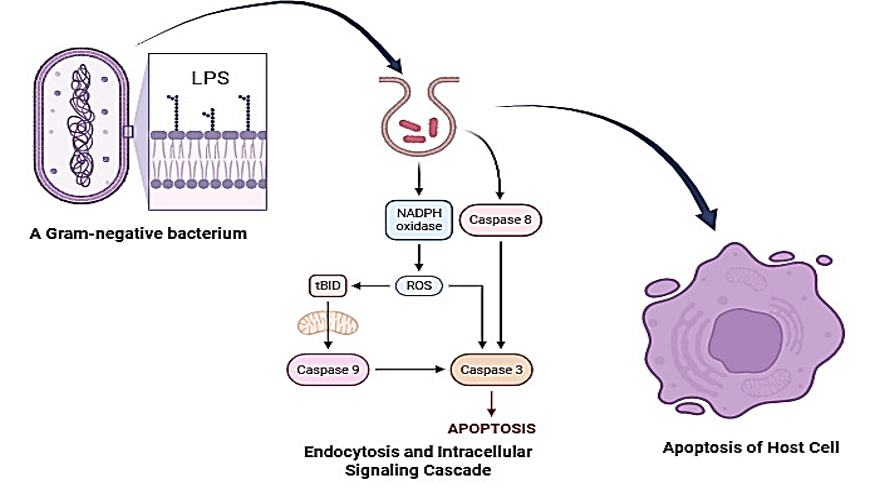
Fig. 1: Quorum Sensing-Induced Endocytosis and Apoptotic Pathway in Host Cells
Pages: 211-226 | 120 Views 49 Downloads





E-ISSN: 2278-4136
- P-ISSN: 2349-8234
- CODEN Code: JPPOHO
- Abbr: J Pharmacogn Phytochem
India (Tel): +91-9711224068
- Toll Free (India): 1800-1234-070