- Printed Journal
- Indexed Journal
- Refereed Journal
- Peer Reviewed Journal
Journal of Pharmacognosy and Phytochemistry
Vol. 14, Issue 6 (2025)
Comparative studies on antioxidant and antibacterial activity of pomegranate leaves (Punica granatum L.) grown in different soil and environmental conditions
Priyanka Das and Tapan Kumar Pal
Leaves of Pomegranate have been used traditionally in Ayurveda medicine for their antioxidant and antimicrobial properties. However, the effectiveness of these properties may be influenced by several environmental factors, such as soil quality, climate condition, and level of pollution. This study aimed to compare the antioxidant and antimicrobial activity of leaves of pomegranate grown in towns and villages in around North 24 Parganas district of West Bengal, India. The antioxidant activity was evaluated using two solvent extract of leaves; water and ethanol, and DPPH free radical scavenging activity, total Polyphenol, total Flavonoid, Tannin and Ascorbic acid content were used to compare antioxidant activity, while the antimicrobial activity was evaluated and compared against three bacterial strain; Staphylococcus aureus, Bacillus subtilis, and Escherichia coli. The pomegranate leaves grown in villages had significantly higher amount of antioxidant and antimicrobial activity compared to those grown in towns. The village-grown leaves have relatively higher levels of total Polyphenol, Tannin and Ascorbic acid which contributed to their enhanced antioxidant activity. However total Flavonoids and DPPH free radical scavenging activity have been found to be relatively higher in Town-grown leaves. The village-grown leaves had also shown higher antimicrobial activity compare to town-grown leaves. Overall, this study suggested that environmental factors such as soil quality, temperature and pollution may influence on the presence of bioactive compounds and overall efficacy of pomegranate leaves. Therefore, pomegranate leaves grown in villages may be a better source of natural antioxidants and antimicrobials components.
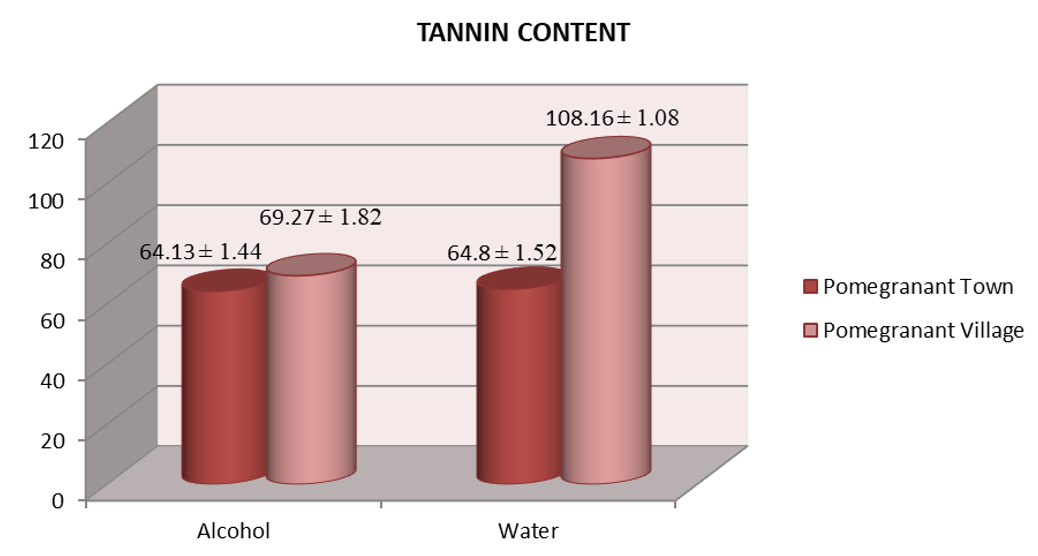
Fig. 1: Estimation of total Tannin Content (mg of Tannic Acid /g of leaf sample) of Pomegranate leaf (Punica granatum L.) collected from Town and Village.
Pages: 300-307 | 286 Views 124 Downloads





E-ISSN: 2278-4136
- P-ISSN: 2349-8234
- CODEN Code: JPPOHO
- Abbr: J Pharmacogn Phytochem
India (Tel): +91-9711224068
- Toll Free (India): 1800-1234-070