- Printed Journal
- Indexed Journal
- Refereed Journal
- Peer Reviewed Journal
Journal of Pharmacognosy and Phytochemistry
Vol. 15, Issue 1 (2026)
A versatile tree of India: Uses and properties of Bael
Gayatri Peherkar, Rupali Danve, Dipali Navle, Dhanraj Parde, Shekhar Pandav and Gajanan Sanap
The Bael tree, scientifically named Aegle marmelos (L.) Correa, stands out as one of the most cherished and valuable medicinal plants found across the Indian subcontinent. For centuries, it has held a position of deep respect and essential utility within traditional healing systems such as Ayurveda, Siddha, and Unani, where it is often treated as a natural cure-all for a wide variety of human ailments. This review brings together detailed information from thirty-five different scientific studies to create a complete picture of what makes this plant so special, covering its physical traits, the nutrients it contains, its complex chemical makeup, and its powerful healing abilities.
Every part of the Bael tree-including its leaves, the hard-shelled fruit, the bark, and the roots-is like a natural factory producing a rich variety of bioactive compounds. These include distinct chemical groups such as alkaloids, coumarins, flavonoids, tannins, and terpenoids, which work together to provide the plant’s strong therapeutic effects. Modern laboratory research has started to confirm what traditional healers have known for a long time: that Bael possesses remarkable medical properties. Studies have proven its ability to lower blood sugar levels (antidiabetic), fight off harmful bacteria and viruses (antimicrobial), reduce swelling and pain (anti-inflammatory), and protect vital organs like the liver from damage (hepatoprotective). It also acts as a powerful antioxidant, helping to clean the body of harmful free radicals, and has even shown promise in fighting cancer cells.
One of the most unique and practically useful aspects of the Bael tree is the dual nature of its fruit. The medical application changes entirely depending on whether the fruit is ripe or unripe. The unripe or half-ripe fruit is famously used as a strong astringent to halt chronic diarrhea and dysentery, whereas the fully ripe fruit acts in the opposite way, serving as a gentle, natural laxative to relieve constipation. Despite its long history of successful use in folk medicine, the Bael tree has not yet been fully integrated into the modern pharmaceutical industry. This is largely due to a lack of standardized production methods and a need for more rigorous testing on humans. This paper carefully examines current scientific knowledge, points out where we still need more answers regarding how these plant chemicals work, and strongly suggests that future research should focus on large-scale clinical trials. Such research is essential to transform this ancient herbal remedy into a reliable, modern treatment for chronic diseases.
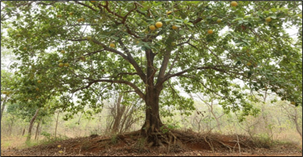
Fig. 1: Bael Tree
Pages: 48-55 | 75 Views 22 Downloads





E-ISSN: 2278-4136
- P-ISSN: 2349-8234
- CODEN Code: JPPOHO
- Abbr: J Pharmacogn Phytochem
India (Tel): +91-9711224068
- Toll Free (India): 1800-1234-070