- Printed Journal
- Indexed Journal
- Refereed Journal
- Peer Reviewed Journal
Journal of Pharmacognosy and Phytochemistry
Vol. 15, Issue 1 (2026)
Clinical effect of Ayurvedic treatment in Manyastambha (Cervical spondylosis): A case study
Aakanksha Laghane and Shrikant Deshmukh
In the present era, rapid urbanization, occupational stress, and sedentary lifestyles have contributed significantly to the rising incidence of degenerative musculoskeletal disorders. Manyastambha, an Ayurvedic condition characterized by pain, stiffness, and restricted movements of the cervical region, is one such disorder increasingly encountered in clinical practice. Classical Ayurvedic texts describe Manyastambha as one of the eighty Vataja Nanatmaja Vyadhis and classify it under Urdhwajatrugata Vikaras. The condition closely correlates with cervical spondylosis in contemporary medicine, a degenerative disease of the cervical spine presenting with neck pain, stiffness, and, in advanced stages, neurological manifestations due to nerve root compression. Conventional management of cervical spondylosis includes non-steroidal anti-inflammatory drugs, muscle relaxants, corticosteroids, physiotherapy, cervical traction, and occasionally surgical intervention; however, long-term outcomes are often unsatisfactory and associated with adverse effects. In contrast, Ayurveda advocates a holistic approach that encompasses pharmacological therapies, Panchakarma procedures, dietary regulation, and lifestyle modification aimed at correcting the underlying Vata imbalance. The present study aims to review and highlight the effectiveness of various Ayurvedic treatment modalities described for the management of Manyastambha, emphasizing their role in providing sustainable symptomatic relief and improving quality of life.
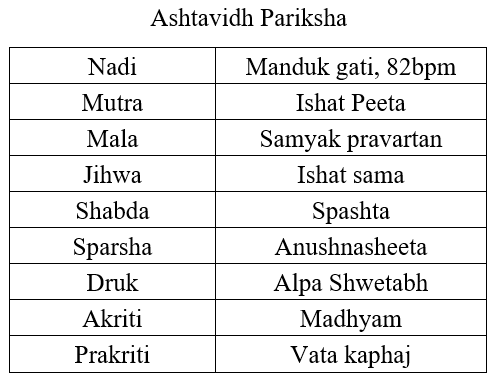
Fig. 1: Ashtavidh Pariksha
Pages: 277-279 | 44 Views 15 Downloads





E-ISSN: 2278-4136
- P-ISSN: 2349-8234
- CODEN Code: JPPOHO
- Abbr: J Pharmacogn Phytochem
India (Tel): +91-9711224068
- Toll Free (India): 1800-1234-070