- Printed Journal
- Indexed Journal
- Refereed Journal
- Peer Reviewed Journal
Journal of Pharmacognosy and Phytochemistry
Vol. 15, Issue 1 (2026)
Bioefficacy of Caesalpinia bonduc (L.) Roxb. from Bhilai region against pathogenic clinical and MTCC microbial isolates
SK Chandvani, Dhananjay Pandey, Renu Tripathi and AK Gupta
Medicinal plants as natural therapeutics are the vital source of bioactive compounds for the amelioration of several dreadful diseases since ages. The current investigation deals with antimicrobial efficacy and phytochemical analysis of Caesalpinia bonduc (L.) Roxb. family: Caesalpiniaceae a traditional medicinal plant, commonly known as Kantkarej. The antimicrobial bioefficacy of leaf, stem and root of C. bonduc were assessed against Clinical and MTCC microbial isolates of Bacillus subtilis (MTCC-441), Staphylococcus aureus (MTCC-96), Escherichia coli (MTCC-1687), Klebsiella pneumoniae (MTCC-3384) and the two fungal isolates viz., Aspergillus niger (MTCC-872) and Candida albicans (MTCC-183). Leaf chloroform extracts of C. bonduc emerged as the most effective extract with maximum zone of inhibition against clinical isolates of S. aureus, whereas maximum antifungal activity was recorded in stem chloroform extracts against clinical isolates of A. niger. The maximum activity index was recorded in case of leaf and stem chloroform extracts against clinical isolates of S. aureus and A. niger respectively. Whereas trivial activity was observed in case of MTCC isolates as compared to that of clinical isolates. The phytochemical analysis in leaf, stem and root of C. bonduc revealed the presence of phytochemicals viz., alkaloids, cardioglycosides, flavonoids, glycosides, phlobatannins, phenolics, phytosterols, quinones, resins, saponins, tannins and terpenoids which might be responsible to confer antimicrobial potentiality. Thus, the present work will be a primary platform to screen out potent medicinal plant as antimicrobials useful in combating several microbial diseases with natural, less side-effects and cost-effective remedies for future generations.
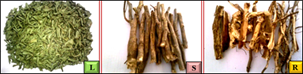
Fig. 1: Sample collection of different parts of C. bonduc (L.) Roxb
Pages: 97-104 | 54 Views 18 Downloads





E-ISSN: 2278-4136
- P-ISSN: 2349-8234
- CODEN Code: JPPOHO
- Abbr: J Pharmacogn Phytochem
India (Tel): +91-9711224068
- Toll Free (India): 1800-1234-070